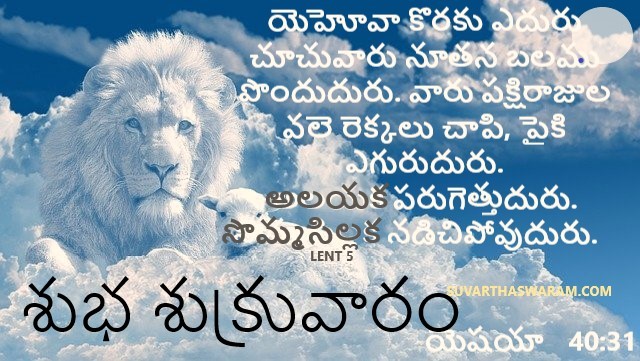
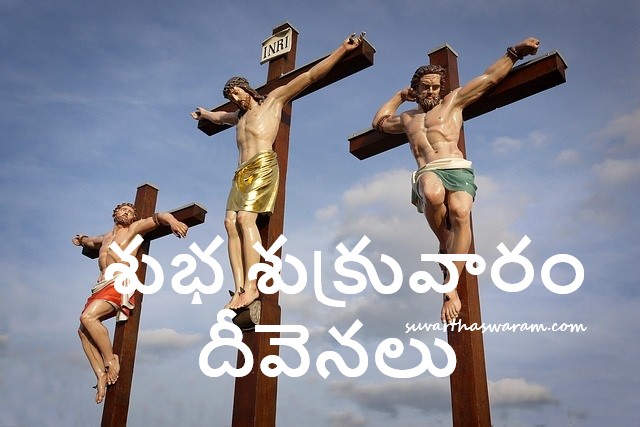
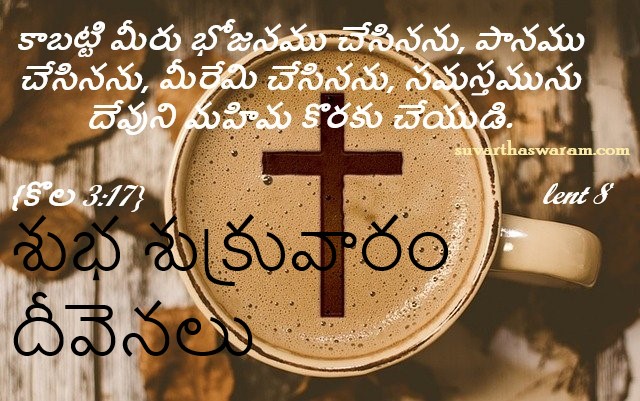
Good Friday Images & యేసు క్రీస్తు సిలువలో పలికిన ఏడు మాటలు

యేసు క్రీస్తు సిలువలో పలికిన ఏడు మాటలు

మొదటి మాట :

తండ్రీ, వీరేమి చేయుచున్నారో వీరెరుగరు గనుక వీరిని క్షమించుము. (లూకా 23:34)

రెండవ మాట :

నేడు నీవు నాతోకూడ పరదైసులో ఉందువు (లూకా 23:43)

మూడవ మాట:

యేసు తన తల్లియు తాను ప్రేమించిన శిష్యుడును దగ్గర నిలుచుండుట చూచి అమ్మా,యిదిగో నీ కుమారుడు అని తన తల్లితో చెప్పెను, తరువాత శిష్యుని చూచి యిదిగో నీ తల్లి అని చెప్పెను. (యోహాను 19:26-27)

నాల్గవ మాట:

ఏలీ, ఏలీ, లామా సబక్తానీ, ఆ మాటకు నా దేవా, నా దేవా నన్నెందుకు చెయ్యి విడిచితివని అర్థము. (మత్తయి 27:46)

ఐదవ మాట:

దప్పిగొనుచున్నాను. (యోహాను 19:28)

ఆరవ మాట:

సమాప్తమైనది (యోహాను 19:30)

ఏడవ మాట:

తండ్రీ, నీ చేతికి నా ఆత్మను అప్పగించుకొనుచున్నాను (లూకా 23:46)


The seven sayings of Christ on Cross with references

“Father, forgive them, for they know not what they do.” — Luke 23:34
“Today shalt thou be with Me in paradise.” — Luke 23:43
“Woman, behold thy Son.” — John 19:26
“My God, my God, why hast Thou forsaken Me?” — Mark 15:34
“I thirst.” — John 19:28
“It is finished.” — John 19:30
“Father, into Thy hands I commend My spirit.” — Luke 23:46

Good Friday Pictures in Telugu

Good Friday Blessings



Good Friday Greetings

యేసు క్రీస్తు సిలువలో పలికిన ఏడు మాటలు

FATHER, FORGIVE THEM; FOR THEY KNOW NOT WHAT THEY DO.

యేసు క్రీస్తు సిలువలో పలికిన ఏడు మాటలు

మొదటి మాట :

తండ్రీ, వీరేమి చేయుచున్నారో వీరెరుగరు గనుక వీరిని క్షమించుము. (లూకా 23:34)

“Then said Jesus, Father, forgive them; for they know not what they do. And they parted his raiment, and cast lots” (Luke 23:34).
1. Having been falsely condemned, scourged, and crucified, He prayed for forgiveness for His enemies.
2. As He taught us to love enemies, He prayed for those who despitefully used Him (Matthew 5:43-48).
3. Though suffering wrongfully, our Lord Jesus Christ did not revile or threaten (I Peter 2:21-24; Is 53:7).
4. This prayer was (a) only for a few, (b) specific to one sin, and (c) based on human ignorance.
5. Rather than presuming eternal life for all present, let us match Stephen’s specific prayer (Acts 7:60).
6. And the Scripture was fulfilled, and he made intercession for the transgressors (Isaiah 53:12).
7. The mercy here sought and granted was only temporal for their abuse of Christ (Cp Acts 14:17).
8. Sin is aggravated by the degree of light in a person, and the soldiers had little (Lu 12:47-48; Jn 19:11).
9. Rejoice that such perfect righteousness was imputed to us in justification (Rom 4:6-8; II Cor 5:21).
10. The princes of this world did not know what they did; but we know things by His Spirit (I Cor 2:6-12).
1. They parted his raiment and cast lots for his woven coat (Matthew 27:35; Luke 23:34; John 19:23-24).
2. The Jews, rulers, soldiers, and thieves railed on him (Matt 27:39-44; Mark 15:29-32; Luke 23:35-37).
VERILY I SAY UNTO THEE, TO DAY SHALT THOU BE WITH ME IN PARADISE.

యేసు క్రీస్తు సిలువలో పలికిన రెండవ మాట :

నేడు నీవు నాతోకూడ పరదైసులో ఉందువు (లూకా 23:43)

“And he said unto Jesus, Lord, remember me when thou comest into thy kingdom. And Jesus said unto him,
Verily I say unto thee, To day shalt thou be with me in paradise” (Luke 23:42-43).
1. Both thieves had been railing against the Lord Jesus prior to these words (Matt 27:44; Mark 15:32).
2. But one thief began to defend Jesus and rebuke the other for his unjust accusations (Luke 23:39-41).
3. Men can only confess Jesus as Lord by the Holy Ghost (I Corinthians 12:3). Praise God for His grace!
4. This thief, by recognizing the kingdom of God, must have been born again to do so (John 3:3).
5. Therefore, we may conclude that Jesus Christ was speaking life even while dying (John 5:25).
6. Paradise is the third heaven (II Cor 12:1-7 cp Gen 1:6-8,14-19,20), where God and the angels dwell.
7. Both the elect thief and Jesus went to God’s Presence that very day, just as Paul taught (II Cor 5:6-8).
8. And we shall be instantly with the Lord in God’s Presence when we depart this body also.
9. Reject the New World Translation that moves the comma and teaches soul sleep from this passage, for the word “today” is modifying when the thief would be in Paradise rather than when Jesus spoke.
 

WOMAN, BEHOLD THY SON! BEHOLD THY MOTHER!

యేసు క్రీస్తు సిలువలో పలికిన మూడవ మాట:

యేసు తన తల్లియు తాను ప్రేమించిన శిష్యుడును దగ్గర నిలుచుండుట చూచి అమ్మా,యిదిగో నీ కుమారుడు అని తన తల్లితో చెప్పెను, తరువాత శిష్యుని చూచి యిదిగో నీ తల్లి అని చెప్పెను. (యోహాను 19:26-27)

“When Jesus therefore saw his mother, and the disciple standing by, whom he loved, he saith unto his mother,
Woman, behold thy son! Then saith he to the disciple, Behold thy mother! And from that hour that disciple
took her unto his own home” (John 19:26-27).
1. There was a particularly personal relationship between our Lord Jesus and John (John 13:23; 21:20).
2. The words addressed to Mary were not about Himself, but were directing her to consider John her son.
3. The words addressed to John were not about John’s mother, but were assigning Mary to John.
4. Even at death’s door, He showed obedience to God’s law with righteous zeal (Ex 20:12; I Tim 5:8).
5. He was lucid and strong enough to engage in wise mental preparation and cry out loudly several times.
6. Again, we should consider that such great righteousness was imputed to us by justification.
1. There was darkness over the earth from 12:00 P.M. to 3:00 P.M. (Matt 27:45; Mark 15:33; Lu 23:44).

MY GOD, MY GOD, WHY HAST THOU FORSAKEN ME?

యేసు క్రీస్తు సిలువలో పలికిన నాల్గవ మాట:

ఏలీ, ఏలీ, లామా సబక్తానీ, ఆ మాటకు నా దేవా, నా దేవా నన్నెందుకు చెయ్యి విడిచితివని అర్థము. (మత్తయి 27:46)

“And at the ninth hour Jesus cried with a loud voice, saying, Eloi, Eloi, lama sabachthani? which is, being interpreted, My God, my God, why hast thou forsaken me?” (Mark 15:34).
1. These words are found prophetically in Psalm 22:1; and they are found comparatively in Matt 27:46.
2. These words are recorded in Hebrew to explain the following confusion by some present (15:35-36).
3. “Well might the sun in darkness hide, and shut his glories in; when Christ the mighty Maker died.”
4. The comfort of God’s gracious Presence and affection for Jesus had been withdrawn due to our sins.
5. The degree of loneliness is determined by the degree of love, affection, and unity had beforehand.
6. The relationship between Jesus and His Father had been inviolate for His life (Isaiah 42:1; Matt 3:17;
11:27; 12:50; 17:5; 26:39,42,53; Luke 2:49,52; John 1:18; 5:17; 8:19,28; 10:17; 14:20; 15:10; 18:11).
7. We are afraid of the darkness and unknown, and Jesus had endured three hours of both in great agony.
8. The waves and billows of God’s wrath rolled over the exposed soul of the Lord Jesus (Psalm 69:1-3).
9. Sin sent the angels out of heaven, our parents out of Eden, and Jesus Christ from God’s Presence.
10. Separation from God’s Presence and enduring His Holy Wrath was given to Jesus (II Thess 1:9).

I THIRST

యేసు క్రీస్తు సిలువలో పలికిన ఐదవ మాట:

దప్పిగొనుచున్నాను. (యోహాను 19:28)

“After this, Jesus knowing that all things were now accomplished, that the scripture might be fulfilled, saith, I
thirst” (John 19:28).
1. The horrible thirst of our Lord Jesus Christ on the cross was prophesied (Psalm 22:15; 69:21).
2. The bodily suffering of Jesus was very real; we cannot forget His humanity and physical experiences.
1. They gave Him a spunge with vinegar on a reed to His mouth (Matthew 27:48; John 19:29).

IT IS FINISHED

యేసు క్రీస్తు సిలువలో పలికిన ఆరవ మాట:

సమాప్తమైనది (యోహాను 19:30)

“When Jesus therefore had received the vinegar, he said, It is finished: and he bowed his head, and gave up the ghost” (John 19:30).
1. What was finished? The work He was sent to do was finished (Matthew 1:21; John 6:39; 17:1-3).
2. Who will require more in the work of redemption, if the Son of God declared it finished (Ro 8:33-34)?
3. Who will require further offering and perfection, if our Lord Jesus perfected us forever (He 10:10-14)?
4. If you are too simple to remember detailed arguments for the truth of salvation, remember these words.
FATHER, INTO THY HANDS I COMMEND MY SPIRIT

యేసు క్రీస్తు సిలువలో పలికిన ఏడవ మాట:

తండ్రీ, నీ చేతికి నా ఆత్మను అప్పగించుకొనుచున్నాను (లూకా 23:46)

“And when Jesus had cried with a loud voice, he said, Father, into thy hands I commend my spirit: and having
said thus, he gave up the ghost” (Luke 23:46).
1. He laid down His life; it was not taken from Him only (John 10:18).
2. He died prematurely; there was surprise He was already dead, for crucifixion kills slowly (Mk 15:44).
3. Though forsaken in God’s consolatory comfort and fellowship, He chose to enter the veil of death with
confidence and faith in the hands of the Most High. It shall not be so severe for faithful saints.
4. Let us consider such great faith and trust in God (Matt 27:43; Hebrews 2:13 cp 11:6; Gal 2:16).

Telugu Christian Good Friday Songs Lyrics & Chords – యేసుక్రీస్తు పాటలు

యేసుక్రీస్తు శ్రమల పాటలు

Lent Day Songs Telugu Lyrics & Chords

Andhra Kraisthava Keerthanalu Song number -182

ఎంతో దుఃఖముఁ బొందితివా నాకొర కెంతో దుఃఖము పొంది తివా
యెంతో దుఃఖము నీకు ఎంతో చింతయు నీకు
ఎంతో దిగులయ్యా నాకు ఆ పొంతి పిలాతు యూ దులు నీకుఁ బెట్టిన శ్రమలను దలపోయఁ గా ||నెంతో||
వచ్చిరి యూదులు ముచ్చట లాడుచు నెచ్చట వాఁడనుచు నిన్ను మచ్చరముతో వారి యిచ్చ వచ్చినట్లు కొట్టి దూషించినారా ||యెంతో||
సుందరమగు దేహ మందున దెబ్బలు గ్రంధులు గట్టినవా నీవు పొందిన బాధ నా డెందము తలఁపనా నందములే దాయెను ||ఎంతో||
కొట్టుకొట్టుమని తిట్టికేల్ దట్టిని న్నట్టిట్టు నెట్టుచును వారు పెట్టుశ్రమలు తుద మట్టున కోర్చియుఁ బెట్టితివా ప్రాణము ||నెంతో||<
నెపముఁ బెట్టుచుఁ దిట్టి యపహసించుచు యూద చపలులు గొట్టి నారా నా యపరాధములకు నా పదలను బొంది నీ కృప నాకుఁ జూపినావా ||యెంతో||
చక్కని నా యేసు మిక్కిలి బాధ నీ కెక్కువ గలిగె నయ్యా ఆహా యొక్క దుష్టుఁడీటె ప్రక్కను గ్రుచ్చి తన యక్కస దీర్చుకొనెనా ||యెంతో||
అన్నదమ్ములైన అక్క సెల్లెం డ్రైనఁ కన్న పిత్రాదు లైన నన్ను ఎన్నఁ డైన బ్రేమించలే రైరి నా యన్నా ప్రేమించినావా ||యెంతో||

Andhra Kraisthava Keerthanalu Song number – 183

సిలువను మోసితివా నా కొఱకై కలువరి మెట్టపైకి సిలువ నా యాత్మలోఁ బలుమాఱు దలఁపఁగాఁ దాలిమి లేదాయెను హా యీ జాలికి మారుగా నేనేమి సేయుదు ప్రేమను మరువఁజాల ||సిలువ||
ఘోరమైనట్టి యీ భారమైన సిలువ ధరియించి భుజముపైని నా దురితముల్ బాపను కరుణచేఁ జనుదెంచి మరణము నొందితివా ||సిలువ||
కలువరి మెట్టపైఁ కాలు సేతు లెల్ల చీలలతోఁ గ్రుచ్చిపట్టి యా సిలువకుఁ గొట్టఁగ విలువైన నీ మేని రక్తము ప్రవహించెనా ||సిలువ||
మెట్టపైన నిన్నుఁ పెట్టిన బాధ నేఁ బట్టి తలంపఁగను ఆహా పట్టైన నీ ప్రేమ నెట్టుల మఱతును కష్టముల్ గలిగినను ||సిలువ||
పంచగాయములను నెంచి యాత్మలోన నుంచి తలంపఁగను హానా మించిన దురితముల్ ద్రుంచి నన్నెంచిర క్షింపవచ్చెను భూమికి ||సిలువ||

Andhra Kraisthava Keerthanalu Song number – 184 ఏమాశ్చర్యము ప్రియులారా క్రీస్తు మరణము

ఏమాశ్చర్యము ప్రియులారా క్రీస్తు మరణము ప్రేమజూడరెమనసార ఆ మహాత్ముఁడు మరణ మగు రీతిఁ గనుకొన్న సామాన్యమగు నొక్క జనుని చందము గాదు ఈ మహిని గల పాప జీవుల పై మహాకృపఁ జూపి నిత్య క్షేమ మొసఁగెడు కొరకు బలు శ్రమ చే మృతుండైనాఁడు స్వేచ్ఛను ||ఏమాశ్చర్యము||<
కొండవలె భారమై లోక పాపములు దండింపఁబడె ఘోరమై నిండు భారము క్రింద నిలుచున్న వేళను గుండె దిగులునఁ దనువు నిండె రక్తపుఁ జెమట మెండుకొని దుఃఖములతో నా తండ్రి యీ పాత్రమును నా కడ నుండి తొలగించుటకు మనపై యుండినను జేయమని వేఁడెను ||ఏమాశ్చర్యము||
కడు దుర్మార్గులచేతను క్రీస్తుఁడు పట్టు వడె దానంతట తాను చెడుగు లెందరు నింద జేసి మోముపై నుమిసి వడిముళ్లతో నల్లఁ బడిన కిరీటము తడయ కౌదల బెట్టి కరముల నడుగులను సిలువ నిడి మేకులు దొడిపి ప్రక్కను రక్తజలములు దొరగ గుంతము గ్రుచ్చి రహహా ||ఏమాశ్చర్యము||<slide>
ఇరు పార్శ్యముల నిద్దరి దొంగల నునిచి మరణావస్థలఁ బెట్టిరి నిరపరాధి ప్రభువు దురితాత్ము లొనరించు తరుచు బాధల కోర్చి మరి వారిఁ గరుణించి యెరుఁగ రేమి యొనర్తురో యీ దురిత జీవులు వీరి నోహో పరమ జనక క్షమించు మని తన యరుల కొరకై వేఁడు కొనియెను ||ఏమాశ్చర్యము||

Andhra Kraisthava Keerthanalu Song number – 185 అపు డర్చకాదు లుప్పొంగిరి

అపు డర్చకాదు లుప్పొంగిరి ప్రభుని విపరీతముగఁ జంపసాగిరి కృపమాలినట్టి పా పపు జిత్తమున నిష్ఠు రపు సిల్వమానిపైఁ బ్రభుని వేయుట కొప్పి ||రపు డర్చ||
యెరూషలేమను నూరి బైటను దుఃఖ కరమైన కల్వరిమెట్టను పరమ సాధుని సిల్వ పైఁ బెట్టి తత్పాద కరమధ్యముల మేకు లరుదుగ దిగఁ గొట్టి ||రపు డర్చ||
చిమ్మె నిమ్మగు మేని రక్తము దాని నమ్ము వారల కెంతో యుక్తము నెమ్మోము వాడి కెం దమ్మి పూవలె మస్త కమ్ము వేటులను ర క్తము జారి కనుపట్టె ||నపు డర్చ||
గడి దొంగ లిరువురుని బట్టిరి ప్రభుని కుడి యెడమలను సిల్వఁ గొట్టిరి చెడుగు యూదులు బెట్టు కడు బాధలను మరియ కొడు కోర్చుకొని వారి యెడ దయ విడఁడయ్యె ||నపు డర్చ||

Andhra Kraisthava Keerthanalu Song number – 186 ఏ పాప మెఱుఁగని యోపావన మూర్తి

ఏ పాప మెఱుఁగని యోపావన మూర్తి పాప విమోచకుండ నా పాలి దైవమా నా పాపముల కొఱ కీ పాట్లు నొందినావా ||యే పాప||
ముళ్లతోఁ గిరీట మల్లి నీ శిరముపై జల్లాటమున మొత్తిరా ముళ్లపోట్లకు శిరము తల్లడిల్లగ సొమ్మ సిల్లిపోతివ రక్షకా ||యే పాప||
కలువరి గిరి దనుక సిలువ మోయలేక కలవరము నొందినావా సిలువ నీతో మోయఁ తులువలు వేఱొకనిఁ దోడుగా నిచ్చినారా ||యే పాప||
చెడుగు యూదులు బెట్టు పడరాని పాట్లకు సుడివడి నడచినావా కడకుఁ కల్వరి గిరి కడ కేగి సిల్వను గ్రక్కున దించినావా ||యే పాప||
ఆ కాల కర్ములు భీకరంబుగ నిన్ను ఆ కొయ్యపై నుంచిరా నీ కాలు సేతులు ఆ కొయ్యకే నూది మేకులతో గ్రుచ్చినారా ||యే పాప||
పలువిధంబుల శ్రమలు చెలరేగఁ దండ్రికి నెలుగెత్తి మొఱలిడితివా సిలువపైఁ బలుమాఱు కలుగుచుండెడి బాధ వలన దాహము నాయెనా ||యే పాప||
బల్లిదుండగు బంటు బల్లెమున నీ ప్రక్కఁ జిల్లిఁ బడఁ బొడిచి నాఁడా ఉల్లోలములవలె నల్ల నీరుబుకంగఁ జల్లారెఁగద కోపము ||యే పాప||
కటకటా పాప సం కటముఁ బాపుట కింత పటుబాధ నొంది నావా ఎటువంటి దీ ప్రేమ యెటువంటి దీ శాంతి మెటుల వర్ణింతు స్వామి ||యే పాప||

Andhra Kraisthava Keerthanalu Song number -187  పాపులయెడ క్రీ స్తుని ప్రియ మెట్టిదో

పాపులయెడ క్రీ స్తుని ప్రియ మెట్టిదో పరికింపరె క ల్వరిగిరిపై నాపదలను దన కీగతిఁ బెట్టెడు కాపురుషుల దెసఁ గనుగొను కృపతో ||బాపుల||
యెరుషలేము క న్యలు కొందరు తన యెదుట వచ్చి యేడ్చుచు సిలువన్ వరుస నప్పురికి వచ్చు నాశన గతు లెరుఁగఁ బలికి వా రల నోదార్చెను ||బాపుల||
శత్రువు లటు తనుఁ జంపుచు నుండఁగ మైత్రిఁ జూపె సమ్మతి తోడన్ స్తోత్రముఁ జేసెను దండ్రీ వీరల దురిత మెల్ల క్షమి యింపవె యనుచును ||బాపుల||
తన ప్రక్కను సిలు వను వేసిన యొక తస్కరుఁ డించుక వేఁడు కొనన్ కనికరము మన మునఁ బెనగొన ని చ్చెను మోక్షము తన తో యుండుటగున్ ||బాపుల||
మితిలేని దురిత జీవుల లోపల మించి యున్న పతితుల కైనన్ హితముగ మోక్షం బిచ్చుటకై శో ణిత మిచ్చెను నా మతి కది సాక్షిగఁ ||బాపుల||

Andhra Kraisthava Keerthanalu Song number -188 చూడరే చూడరే క్రీస్తుని జూడరే

చూడరే క్రీస్తుని జూడరే నా సఖులార చూడరే క్రీస్తుని జూడరే చూడరే నాముక్తి పదవికి ఱేఁడు యేదశఁ గూడినాఁడో ||చూడరే||
మించి పొంతి పిలాతు సత్య మొ కించుకైనఁ దలంప కక్కట వంచనను గొట్టించి యూదుల మంచితనమే కోరి యప్ప గించెనా మేలు గ ణించెనా ఇతనిఁ గాంచి కాంచి భక్తులెట్లు స హించిరో పరికించి మీరిది ||చూడరే||
>మంటికిని నాకాశమునకును మధ్యమున వ్రేలాడుచుండఁగ నంటఁ గొట్టఁగ సిలువ మ్రాని కప్పగించుటకొరకు నిన్నుఁ గాంచెనా యిది మది నెంచెనా హా నా కంట నే నిటువంటి యాపదఁ గంటిఁ బ్రాణము లుండునే యిఁకఁ ||జూడరే||
ఊటగా రక్తంబు కారుచు నుండ బల్లెపుఁ బ్రక్కపోటు మాటిమాటికిఁ జూడ దుఃఖము మరలునే తలమీఁద ముళ్లకి రీటమా యితనికి వాటమా యూదులు మోటులై బాహాటమున నీ పాటులను గాటముగఁ జేసిరి ||చూడరే||

యేసు క్రీస్తు సిలువలో పలికిన ఏడు మాటలు

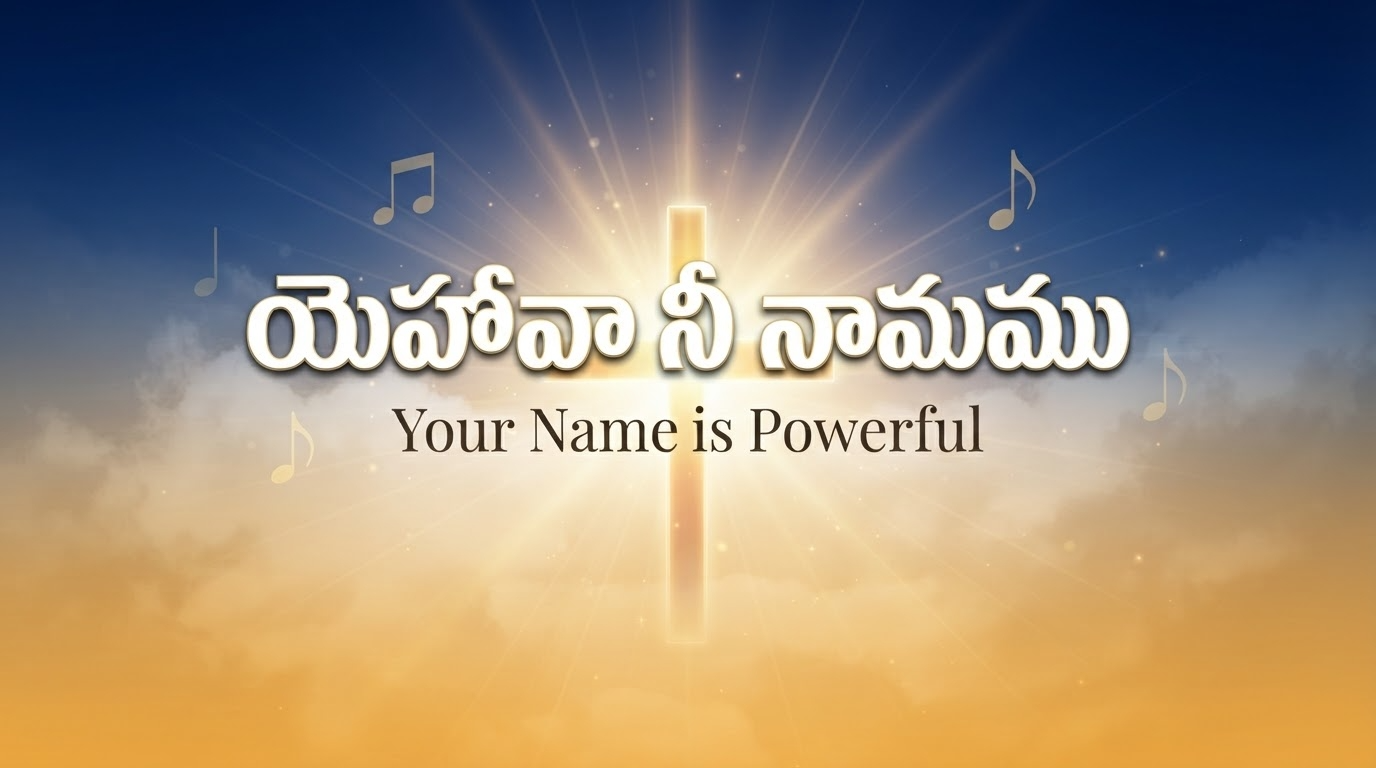
యెహోవా నీ నామము TELUGU CHRISTIAN SONG LYRICS – YEHOVA NE NAAMAMU

yehova ne naamamu lyrics in Telegu English

యెహోవా నీ నామము – గీతం విశ్లేషణ

“యెహోవా నీ నామము” (Yehova Nee Naamamu) అనేది తెలుగులో అత్యంత ప్రాచుర్యం పొందిన క్రైస్తవ ఆరాధన గీతాలలో ఒకటి. ఈ గీతం 1973లో పాస్టర్ కురకుల డేవిడ్ (ఈయన్ను పాస్టర్ డేవిడ్ అయ్యా అని కూడా పిలుస్తారు) ద్వారా రచించబడింది. ఇది యెహోవా పేరు యొక్క మహత్యాన్ని, శక్తిని మరియు శ్రేయస్సును పద్యాల రూపంలో ప్రసిద్ధి చెందిస్తుంది.

ఈ గీతం పలు క్రైస్తవ సభల్లో, వేడుకలలో మరియు పూజా కార్యక్రమాల్లో ఊరూరా పాడబడుతూ ఉంది. పలు కళాకారులు, అందున JK క్రిస్టోఫర్ మరియు విన్సెంట్ జోయెల్ వంటి గాయకులు దీన్ని పాడటంలో ప్రసిద్ధిచెందారు. ఈ పాట తెలుగు క్రైస్తవ సమాజానికి చాలా ప్రిందమైనది మరియు అనేక సమకాలీన కళాకారుల ద్వారా ఆలాపించబడుతుంది.

గీతం వివరాలు

  • శీర్షిక (తెలుగు): యెహోవా నీ నామము
  • ఇంగ్లీష్ అనువాదం: Yehova Nee Naamamu Entho Balamainadi
  • రచయిత: పాస్టర్ కురకుల డేవిడ్
  • రచన సంవత్సరము: 1973
  • భాష: తెలుగు
  • గీతం కేటగిరీ: ఆరాధన గీతం

తెలుగు లిరిక్స్ SONG LYRICS

పల్లవి (Chorus)

యెహోవా నీ నామము ఎంతో బలమైనది యేసయ్య నీ నామము ఎంతో ఘనమైనది ||యెహోవా||

చరణం 1

మోషే ప్రార్ధించగా మన్నాను కురిపించితివి యెహోషువా ప్రార్ధించగా సూర్యచంద్రుల నాపితివి ||యెహోవా||

చరణం 2

నీ ప్రజల పక్షముగా యుద్ధములు చేసిన దేవా అగ్నిలో పడవేసినా భయమేమి లేకుండిరి ||యెహోవా||

చరణం 3

సింహాల బోనుకైనా సంతోషముగా వెళ్ళిరి ప్రార్థించిన వెంటనే రక్షించె నీ హస్తము ||యెహోవా||

చరణం 4

చెరసాలలో వేసినా సంకెళ్ళు బిగియించినా సంఘము ప్రార్థించగా సంకెళ్ళు విడిపోయెను ||యెహోవా||

చరణం 5

పౌలు సీలను బంధించి చెరసాలలో వేసినా పాటలతో ప్రార్ధించగా చెరసాల బ్రద్దలాయే ||యెహోవా||

ఇంగ్లీష్ అనువాదం (అర్థం)

పల్లవి (Chorus)

Yehova, Your name is very powerful, Oh Jesus, Your name is so glorious ||Yehova||

చరణం 1

When Moses prayed, You showered manna from heaven, When Joshua prayed, You made the sun and moon stand still ||Yehova||

చరణం 2

You fought battles for Your people, Oh God, Even in the fire, they had no fear ||Yehova||

చరణం 3

Even in the lion’s den, they were joyful, At their prayer, Your hand rescued them ||Yehova||

చరణం 4

Though they were thrown in prison with chains, When the church prayed, the chains broke loose ||Yehova||

చరణం 5

When Paul was imprisoned and chained in jail, With songs and prayers, the prison walls trembled ||Yehova||

యెహోవా నీ నామము – English Transliteration & Translation

For those who cannot read Telugu script, here is the complete worship song “Yehova Nee Naamamu” written in English phonetic words. This makes it easy for non-Telugu speakers to read, understand, and even sing along with this powerful Christian hymn.


CHORUS (Pallavi)

Yehova nee naamamu entho balamainadi Yesayya nee naamamu entho ghanamainadi ||Yehova||

Translation:

“O Yehova, Your name is so very powerful, O Jesus, Your name is so very glorious. ||Yehova||”


VERSE 1 (Charanam 1)

Moshe prarthinchaaga mannanu kuripinchithivi Yehoshuva prarthinchaaga suryachandrula naapithivi ||Yehova||

Translation:

“When Moses prayed, You sent us manna (bread from heaven), When Joshua prayed, You made the sun and moon stand still. ||Yehova||”


VERSE 2 (Charanam 2)

Nee praja pakshmaaga yuddhamulu chesthunna deva Agnilo padavesthunna bhayamemi lekkundi ||Yehova||

Translation:

“O God, You fought battles on behalf of Your people, Even when cast into fire, there was no fear. ||Yehova||”


VERSE 3 (Charanam 3)

Simhala bonukaina santoshamunga velliri Prarthinchinvente rakshinche nee hastu ||Yehova||

Translation:

“Even in the lions’ den, they went with joy and peace, When they prayed, Your hand rescued them. ||Yehova||”


VERSE 4 (Charanam 4)

Charasalalo vesthunna sankelu bigiyinchinana Samuhamu prarthinchaaga sankelu vidipoyana ||Yehova||

Translation:

“Though chains were placed in dungeons, When the multitude prayed, the chains broke loose. ||Yehova||”


VERSE 5 (Charanam 5)

Paulu silanu bandhinchi charasalalo vesthunna Patalo prardhinchaaga charasala biddalaaye ||Yehova||

Translation:

“Paul was bound with Silas in chains and dungeons, They sang songs and prayed, and the prison doors opened. ||Yehova||”


Full Song Flow (Verse Order)

Chorus → Verse 1 → Chorus → Verse 2 → Chorus → Verse 3 → Chorus → Verse 4 → Chorus → Verse 5 → Chorus (repeated)


Key Biblical References in the Song

  • Moses & Manna: Exodus 16 (God provided bread in the wilderness)
  • Joshua & Sun/Moon Standing Still: Joshua 10:12-13 (Divine power over nature)
  • Lions’ Den: Daniel 6 (Daniel in the lion’s den, protected by God)
  • Prison Chains Breaking: Acts 16:25-26 (Paul & Silas in Philippi prison, earthquake broke chains)
  • Overarching Theme: God’s power and faithfulness to protect and rescue His people

Song Meaning & Purpose

This worship song emphasizes God’s almighty power and the strength found in His name. It uses biblical narratives to remind believers that:

  • God’s name itself carries divine power
  • Prayer activates God’s intervention
  • Faith in God’s name brings deliverance and protection
  • Historical biblical examples prove God’s faithfulness
  • Believers can trust God’s name in any circumstance

The song is designed for congregational worship, prayer meetings, and personal devotion, serving as both a reminder of God’s past faithfulness and an encouragement for present trust.


Pronunciation Guide for Non-Telugu Speakers

  • Yehova = “Yay-HO-vuh” (Hebrew name for God, similar to Jehovah)
  • Nee = “Nay” (Your)
  • Naamamu = “NAH-muh-moo” (Name)
  • Entho = “EN-tho” (How/So)
  • Balamainadi = “BAH-luh-MY-nuh-dee” (Powerful)
  • Ghanamainadi = “GHAH-nuh-MY-nuh-dee” (Glorious)
  • Yesayya = “Yay-SAH-yuh” (Jesus in Telugu)
  • Prarthinchaaga = “Prar-THIN-chah-gah” (When prayed)
  • Moshe = “MOH-shay” (Moses)
  • Yehoshuva = “Yay-ho-SHOO-vuh” (Joshua)
  • Suryachandrula = “SU-ryuh-CHAN-dru-luh” (Sun and moon)
  • Simhala = “SIM-huh-luh” (Lions)
  • Paulu Silanu = “PAH-lu SI-luh-nu” (Paul and Silas)

How to Use This Post

  • Share with English-speaking congregation members who want to learn the song
  • Use as a teaching resource for understanding Telugu Christian worship music
  • Help non-Telugu speakers participate in congregational singing
  • Provide historical and biblical context for deeper spiritual understanding
  • Use for personal devotion and prayer meditation

This transliteration and translation are provided to help English speakers connect with this beloved Telugu Christian hymn and experience the power of God’s name through worship.

సంగీత మెలోడి మరియు సంగీత సూచనలు

ఈ గీతం సులభమైన మరియు ఆకర్షణీయమైన సంగీత సంరచన కలిగి ఉంది, ఇది ఆరాధన సభలలో సులభంగా అందిస్తుంది.

  • సంగీత కీ (గిటార్): A మైనర్ (Am)
  • ప్రధాన తీగలు: Am, Dm, G, D
  • స్ట్రమ్మింగ్ పద్ధతి: నుండి దిగువకు, క్రమం చేయాలి, పైకి, నుండి దిగువకు, పైకు
  • టెంపో: మధ్యమ వేగం
  • సంగీత శైలి: ఆరాధన, సమకాలీన క్రిస్టియన్

గీతం యొక్క అర్థం మరియు సందేశం

ఈ గీతం యెహోవా యొక్క శక్తి, కృపా మరియు రక్ష గురించి ఎంచచిన సంవాదం నిలుస్తుంది. ఇది బైబిల్‌లోని వివిధ చరిత్రలను సూచిస్తూ, దేవుడు తన ప్రజలకు ఎప్పుడు వీడ్పు ఇచ్చినాడో చూపుతుంది.

బైబిల్ సూచనలు: మోషే చరిత్ర (నిర్గమనం), యెహోషువా చరిత్ర (యెహోషువ 10:12-13), శద్రాక్, మేషాక్, అబేద్నెగో చరిత్ర (డేనియల్ 3), పీటర్ జైలుకు సంబంధించిన (అపో 12), మరియు పౌల్ జైలుకు సంబంధించిన (అపో 16).

వాయిద్య నిర్వహణ

ఈ గీతం వివిధ వాయిద్యాలతో ఆలపించవచ్చు:

  • గిటార్: సులభమైన తీగలతో సీధాసరళ పద్ధతిలో
  • కీబోర్డ్: A మైనర్ కీలో సుందరమైన మెలోడీ
  • డ్రమ్‌లు: క్రమంగా ఉన్న బీట్ సంపూర్ణ సంగీత అనుభవానికి జోడిస్తుంది
  • బేస్: అండర్‌టోన్‌ను బలపరిచేందుకు కీలు

ముఖ్యమైన సమాచారం

ఈ గీతం దేవుని మహత్యం, శక్తి మరియు ప్రాశస్త్యం యొక్క ప్రసంగంగా ఘనంగా నిలబడుతూ, విభిన్న బైబిల్ కథల ద్వారా ఆరాధకులకు ప్రేరణ అందిస్తుంది. ఇది ప్రతి తెలుగువారి విశ్వాస ప్రయాణలో ఒక ముఖ్య భాగం.

ఈ గీతం తెలుగులో క్రైస్తవ సమాజంలో ఎంతో ప్రియమైనది. ఇది సభల్లో పాడబడుతూ, యువకులు నేర్చుకుంటూ, ఉపాసకుల హృదయాలలో నిలిచిపోయినది. ఈ గీతం మనల్ని దేవుని శక్తిపై నిర్ভర చేసుకోవడానికి ప్రేరేపిస్తుంది.

ఆర్టిస్టులు మరియు సంస్కరణలు

పలు ప్రసిద్ధ గాయకులు ఈ గీతం ఆలపించారు, ఆ దీనిల్లో:

  • JK క్రిస్టోఫర్
  • విన్సెంట్ జోయెల్
  • జెస్సీ పాల్
  • డాక్టర్ బెట్టీ
  • రెవ. డేవిడ్ కురకుల

ప్రతి కళాకారుడు ఈ గీతానికి వారి స్వంత శైలిని జోడించారు, ఇది విభిన్న శ్రోతలకు సంబంధం కలిగిస్తుంది.

మీ సమ్మేళనాల కోసం సలహాలు

  • ఈ గీతం ఆరాధన సేవల ప్రారంభం లేదా సమాప్తిలో సరిగ్గా సరిపోతుంది
  • ఇది ప్రార్ధన సభల కోసం ఆదర్శమైనది
  • పిల్లలకు దేవుని శక్తి గురించి నేర్పించడానికి ఉపయోగించవచ్చు
  • సమూహ గీతం కోసం సులభమైన భాష మరియు పునరావృత్తుల కారణంగా సరిపోతుంది

ఈ కాలంతట విస్మరణీయమైన గీతం ఇంకా కూడా క్రిస్టియన్‌ల హృదయాలను తాకుతూ, ఆయన కృపను జీవించడానికి ఉత్సాహిస్తూ ఉంది.

SUVARTHASWARAM – తెలుగు క్రిస్టియన్ మినిస్ట్రీ

Mattladivaaramu Palm Sunday Songs 1

593 MATTALAADHIVAARAMU

Yaesuva jayamuthoa yerushalaemuna – pra – vaesamu jaesina yao prabhuvaa = vaasiga
bogadaga – vasudhanu janulu – vijayamu chaesina yoa prabhuvaa Yaesuva
1. mattalu battiyu – battalu parachiyu–gattiga paadaga yoa prabhuvaa=attahaasamu
thoa – asvamu nekkaka – anakuva gaardhabha mekkina prabhuvaa Yaesuva
2. pillalu pedhdhalu – palu kaekalathoa – paliki nuthinchaga yoa prabhuvaa = challaga
vaanini sari yani yoppi – santhoa shinchina yoa prabhuvaa Yaesuva
3. kondharu vaarini – thondhara jaeyaga – kuurmini dhidhina yoa prabhuvaa = andharu
maanina – arachunu raallani – aana thi nichchina yoa prabhuvaa Yaesuva
4. yerushalaem korakai yoarimi juupiyu naedchina dhaya gala yoa prabhuvaa =
yerusha laemu nandhuna yaalaya manthanu subhra parachina yoa prabhuvaaYaesuva
5. maa korakai thana praanamu pettina –maanyuda viive yoa prabhuvaa = maa korakai
dhara – maranamu gelchina – mahima svaruupuda yoa prabhuvaa Yaesuva
6.maadhu manassunu hrudhayamu naathmanu niidhiga gaikonu moa prabhuvaa =
saadh ara vaakkulu chakkaga palikiyunaadharinchu mamu yoa prabhuvaaYaesuva
Bunyan Joseph

Song no: 593

యేసువ జయముతో – యేరుషలేమున – బ్ర – వేశము జేసిన యో ప్రభువా = వాసిగ బొగడగ – వసుధను జనులు – విజయము జేసిన యో ప్రభువా

1. మట్టలు బట్టియు – బట్టలు బరచియు – గట్టిగ బాడగ యో ప్రభువా = అట్టహాసముతో – అశ్వము నెక్కడ – అణకువ గార్దభ మెక్కిన ప్రభువా

2. పిల్లలు పెద్దలు – పలుకేకలతో – బలికి నుతించగ యో ప్రభువా = చల్లగ వానిని – సరియని యొప్పి – సంతోషించిన యో ప్రభువా

3. కొందరు వారిని – తొందర జేయగ – కూర్మిని దిద్దిన యో ప్రభువా = అందరు మానిన – అరచును రాళ్లని – అతని నిచ్చిన యో ప్రభువా

4. యేరుషలేం కొరకై – యోరిమి జూపియు నేడ్చిన దయగల యో ప్రభువా = యేరుషలేమందున – యాలయ మంతను – శుభ్రపరచి యో ప్రభువా

5. మా కొఱకై తన – ప్రాణము బెట్టిన – మాన్యుడవీవె యో ప్రభువా = మా
కొరకై ధర – మరణము గెల్చిన – మహిమ స్వరూపుడ యో ప్రభువా

6. మాదు మనస్సుతో – హృదయము నాత్మను – నీదిగ గైకొని మో ప్రభువా = సాదర వాక్కులు – చక్కగ బలికియు – నాదరించుమము నో ప్రభువా

594. PALM SUNDAY
Yaesu prabhuvu yerushalaemu –pravaesinchina vidhamu = bhaasuramuga thana
mahima chuudagaa – chaesenu aa dhinamu Yaesu prabhuvu yerushalaemu
1.bhaara vaahaka gaardhabha mekki – baahaatamu gaanu = bayalu dhaerenu
jaejaelanagaa – priya moppaga thaanu Yaesu prabhuvu yerushalaemu
2. gattiga paaduchu – ganthulu vaeyuchu – attahaasamuthoa = kottuchu kara
thaalamulanu pedhdhagaa–kuurimi chupiriga Yaesu prabhuvu yerushalaemu
3. Pillalu pedhdhalu mellaga boavuchu – ullaasamuthoanu = challani prabhuvani
jayamulu gottiri – santhoashamuthoanu Yaesu prabhuvu yerushalaemu
4. kondharu muurkhulu – thondhara chaeyuchu – mundhuku vachchirigaa = andharu
maanina – arachunu raallani apudaa prabhu vanagaa Yaesu prabhuvu yerushalaemu
5. chigurutaaku chetla kommalanu – sogasuga maargamuloa = baaguga parachiribhakthini chuupiri- saaguchu janulantha Yaesu prabhuvu yerushalaemu
6. yerushalaemu – gathi gani prabhuvu – yaedchenu ealugeth thi = mariyu yerushalaem
dhaevaalayamunu parisubhratha jaese Yaesu prabhuvu yerushalaemu
Gera Premayya

595. PALM SUNDAY
Manoa vilasithambow – dhimambu – mahimaanvithambu = anantha jagathii
manoaharambu – ghanaadhi prabhu yasah prakaasakambu Manoa vilasithambow
1. mandha maaruthamu landhamu nosagaga – dendha mulaku naanandhamu nidagaa =
sundhara pakshula suma dhura gaanamu sukhaavahambai soabhinchenugaa
Manoa vilasithambow
2. aruna bhaaskaruni kiranaakaramu – dhara dhiktamula dhari jaerenugaa = dharaa
valaya khara bhaanunichae dhaga dhdhagiiyambai velgenugaa Manoa vilasithambow
3.pulugila kila kila kalavaramulathoa pondhuga galasina bhuuri ravambu =lalitha
manoa hara sraavya ma vinumaa thalapan dhaaniki kaarana maemoa Manoa vilasitha
4.prasanna vadhanudu – bhaanu thaejudu – asankhya jana gana parivrutha baludu =
prasitha raasa bhaasiinudu yaesudu asama saanthithoa – naru dhenche nahoa
Manoa vilasithambow
6. jayamulu baadedu baala chayamuthoa – saathvikudai raasabhambu nekki =
jayoathsavambuthoa sarvaesvarudu chaniraa hrudhayamu samarpinchedhamu
Manoa vilasithambow ..
E.G.Anandham

Penitential practices during Lent across Denominations

Penitential practices during Lent vary across different Christian denominations, reflecting diverse theological perspectives and traditions. Here’s an overview of how some denominations observe Lent through penitential practices:

-> Anglican/Episcopal

Anglicans and Episcopalians observe Lent with fasting, prayer, and almsgiving. They may also participate in the Stations of the Cross, a devotion that commemorates Jesus Christ’s last day on Earth. The Book of Common Prayer provides guidelines for Lent, emphasizing repentance and self-examination .

-> Eastern Orthodox

The Eastern Orthodox Church has a strict fasting regimen during Lent, abstaining from meat, dairy, and, on some days, olive oil and wine. This period is also marked by increased prayer services, such as the Liturgy of the Presanctified Gifts, and a focus on charity and almsgiving. The aim is to cleanse both body and soul in preparation for Easter .

-> Lutheran

Lutherans observe Lent with a focus on repentance and reflection on one’s baptism. While fasting is not mandated, individuals may choose to give up certain luxuries as a form of self-discipline. Lutherans also engage in additional prayer and attend services that may include the Stations of the Cross or midweek Lenten services .

-> Methodist
Methodists participate in Lent through fasting, prayer, and acts of charity. They may also make a personal sacrifice by giving up a particular food or activity. The United Methodist Church encourages the observance of Holy Communion more frequently during Lent as a means of grace to grow closer to God .

-> Roman Catholic
Catholics are required to fast on Ash Wednesday and Good Friday and abstain from eating meat on all Fridays during Lent. They are also encouraged to give up personal luxuries and perform acts of penance and charity. Confession (the Sacrament of Reconciliation) is emphasized as a way to seek God’s mercy for sins [3].

-> Reformed Churches
In Reformed traditions, including some Presbyterian and Congregationalist churches, Lent is observed with a focus on personal repentance and renewal of faith. Practices may include fasting, prayer, and reading Scripture, but there is less emphasis on formal rituals. Participation varies widely among congregations .

-> Non-denominational and Other Christian Churches
Among non-denominational and other Christian churches, Lenten observance can vary significantly. Some may adopt practices similar to those of liturgical traditions, such as fasting and almsgiving, while others may focus more on personal spiritual disciplines without formal Lenten rituals .

-> Summary
Across Christian denominations, Lent serves as a time for believers to reflect on Jesus Christ’s sacrifice, repent of sins, and prepare their hearts for the celebration of Easter. While the specific practices and the emphasis placed on them may differ, the underlying themes of repentance, prayer, and charity are common to all [2][3][4][5].

Examples of Penitential Practices during Lent

What are some examples of penitential practices during lent?

During Lent, Christians are called to deepen their spiritual life through acts of penance, reflection, and renewal in preparation for Easter. Besides fasting and prayer, there are several other penitential practices that can be embraced to foster a spirit of repentance and draw closer to God. Here are some examples:

1. Almsgiving : This involves giving to the poor and performing acts of charity. Almsgiving is a way to share God’s love with others, especially those in need, and to practice generosity as a tangible expression of faith.

2. Self-examination and Confession : Lent is a time for believers to reflect on their lives, identify areas of sin, and seek God’s forgiveness. Confession, whether in a personal prayer or through the sacrament of reconciliation, allows for the acknowledgment of sins and the receiving of God’s mercy.

3. Reading and Meditating on Scripture : Engaging with the Bible is encouraged during Lent as a means to reflect on the life, death, and resurrection of Jesus Christ. Scripture reading and meditation can inspire repentance and spiritual growth[1][2][4].

4. Participation in Lenten Services : Many churches offer special services during Lent, such as Stations of the Cross, which provide opportunities for communal reflection on Jesus’ suffering and sacrifice. These services can deepen the experience of repentance and preparation for Easter[1][2][4].

5. Acts of Service and Sacrifice : Volunteering, helping those in need, or making sacrifices for the benefit of others are ways to live out the call to love and serve as Jesus did. These acts can be expressions of repentance and a desire to follow Christ more closely[1][2][4].

6. Simplifying Life : Reducing distractions and focusing on spiritual matters can create more space for God in daily life. Simplifying life can lead to a more repentant and reflective Lenten experience[2].

7. Seeking Reconciliation : Making amends with those who have been wronged or forgiving those who have caused hurt embodies the reconciliation that Christ offers. This can be a profound act of repentance[2].

8. Charitable Giving : Donating to charitable causes is a practical way to express repentance by sharing with those in need and loosening the grip of materialism[2][4].

9. Environmental Stewardship : Caring for creation by adopting sustainable practices can be an act of repentance for the ways one’s lifestyle may contribute to environmental harm[2].

10. Spiritual Disciplines : Practicing other spiritual disciplines, such as silence, solitude, or journaling, can aid in self-reflection and foster a repentant heart[2].

These practices are not ends in themselves but are meant to draw believers closer to God, deepen their understanding of the gospel, and prepare them to celebrate the resurrection of Jesus Christ with renewed faith and joy.


Genesis Bible Quiz – 2 Questions and Answers

40 questions and answers from Genesis of the Old Testament Bible
Genesis Quiz Questions and Answers These questions cover a range of topics from the book of Genesis, including the creation story, the patriarchs, and key events and figures in the early biblical narrative.

Here are 40 quiz questions and answers from the book of Genesis in the Old Testament, suitable for a quiz aimed at a general audience, VBS children , sunday school and even youth ministry:

1. Who created the heavens and the earth?
– God

2. On which day did God create light?
– The first day

3. What did God use to create Eve?
– Adam’s rib

4. Who were the first two sons of Adam and Eve?
– Cain and Abel

5. What was the sign of the covenant between God and Noah?
– A rainbow

6. Who was the oldest man recorded in the Bible and how old was he?
– Methuselah, 969 years old

7. Who was the father of those who live in tents and raise livestock?
– Jabal

8. At whose time did men begin to call on the name of the Lord?
– Enos’ time

9. Who was taken by God so that he did not experience death?
– Enoch[5]

10. What was the name of the tower that the people built to make a name for themselves?
– The Tower of Babel

11. Who was Abram’s wife?
– Sarai

12. What did Esau trade his birthright for?
– A piece of bread and lentil stew

13. What was the name of the river that flowed out of Eden and branched into four rivers?
– Pison

14. How many pairs of clean animals did God instruct Noah to take into the ark?
– Seven pairs

15. Who was known as “a father of all who play stringed instruments and pipes”?
– Jubal

16. What did God place east of the Garden of Eden to guard the way to the Tree of Life?
– Cherubim and a flaming sword

17. Which of Jacob’s sons was held in Egypt while the others returned to Canaan to fetch Benjamin?
– Simeon

18. Which of these individuals was NOT a son of Noah?
– Enoch

19. Who was considered righteous and walked with God but was not Noah?
– Enoch

20. At what age did Noah start building the ark?
– 600 years

21. Which son of Jacob was responsible for suggesting the selling of Joseph to the Ishmaelites?
– Judah

22. Which city did Abraham originally come from?
– Ur

23. What was the name of Sarah before God changed it?
– Sarai

24. Who was the first murderer in the Bible?
– Cain

25. What was the name of the place where God confused the language of the whole world?
– The Tower of Babel

26. Who was the first person to build an altar to the Lord?
– Noah

27. What was the name of the garden where Adam and Eve lived?
– The Garden of Eden

28. Who was Abraham’s nephew?
– Lot

29. What did God create on the third day?
– Dry land and plants

30. Who was the first human being?
– Adam

31. What was the first thing that God found not good in His creation?
– That man was alone

32. Who was the mother of Ishmael?
– Hagar

33. What did God ask Abraham to sacrifice as a test of faith?
– His son, Isaac

34. Who was Isaac’s wife?
– Rebekah

35. What did Jacob exchange for Esau’s birthright?
– Bread and lentil stew

36. Who was the first person to die in the Bible?
– Abel

37. What was the name of the woman who hid the spies at Jericho?
– Rahab (Note: This is from the book of Joshua, not Genesis)[5]

38. Who was the first person to be called a Hebrew in the Bible?
– Abraham

39. What was the name of the prince who raped Jacob’s daughter Dinah?
– Shechem

40. Who was the first person to interpret dreams in the Bible?
– Joseph


Christian # Common Lenten Sacrifices

What are some common lenten sacrifices across different christian denominations?

Common Lenten sacrifices vary across different Christian denominations, reflecting the diverse practices and theological emphases within the Christian faith. Despite these differences, the underlying intent of Lenten sacrifices is to foster spiritual growth, repentance, and preparation for Easter. Here are some common Lenten sacrifices and practices observed by various Christian denominations:

Roman Catholic

– Fasting and Abstinence : Catholics are required to fast on Ash Wednesday and Good Friday, and abstain from eating meat on all Fridays during Lent. Fasting is generally understood as having one main meal a day with two smaller meals that do not equal the main one.
– Almsgiving : Encouraged to give to the poor and perform acts of charity.
– Prayer and Confession : Increased prayer and participation in the Sacrament of Reconciliation (Confession) are emphasized.

Anglican/Episcopal

– Fasting : While not as prescriptive as in the Catholic tradition, Anglicans are encouraged to fast or give up certain luxuries.
– Prayer and Reflection : Engaging in more frequent prayer and meditative practices, such as reading devotional literature or participating in Lenten study groups.
– Service : Acts of service and charity are encouraged as a way of living out one’s faith in action.

Eastern Orthodox

– Strict Fasting : The Orthodox Church observes a strict fast during Lent, abstaining from meat, dairy, and, on some days, oil and wine.
– Increased Prayer Services : Participation in additional liturgical services, such as the Liturgy of the Presanctified Gifts, is common.
– Almsgiving and Acts of Mercy : Emphasized as essential practices during Lent.

Lutheran

– Fasting : Individual choice rather than a mandated practice, with a focus on self-discipline and reflection.
– Prayer and Devotion : Increased emphasis on personal and communal prayer, including attending Lenten services.
– Charitable Actions : Encouraged to engage in acts of kindness and support for those in need.

Methodist

– Fasting and Personal Sacrifice : Individuals may choose to give up certain foods or activities as a form of self-denial.
– Prayer and Study : Participation in Lenten study groups and increased personal prayer time.
– Service and Almsgiving : Acts of service within the community and charitable giving are highlighted.

Non-Denominational and Other Christian Churches

– Varied Practices : Observances can range widely, with some individuals choosing to fast or give up certain comforts, while others may focus on spiritual disciplines like prayer, Bible study, and acts of service without formal fasting.

Across these denominations, the practice of giving something up for Lent serves as a physical and spiritual discipline intended to draw believers closer to God. It is a time for Christians to reflect on Jesus’ sacrifice and prepare their hearts for the celebration of His resurrection at Easter. While the specifics of the Lenten sacrifice may vary, the spirit of repentance, self-examination, and devotion unites Christians during this solemn season[1][2][3][5][6].

Quiz 1 – Beginners Sunday School Basic Q & A

Creating a quiz based on the Old Testament and New Testament for kids can be both fun and educational. Here are 30 basic questions and answers that cover a range of stories and themes from the Old Testament. These questions are designed to be accessible for young children, helping them to learn about the Bible in an engaging way.

These can be used for VBS also

1. What was the first thing that God created?
– Light

2. In what city was Jesus born?
– Bethlehem (Note: While this is a New Testament detail, it’s foundational)

3. What was the boat Noah built called?
– An Ark

4. How many of each type of animal did Noah have on the ark?
– Two

5. What are we told to do in the fifth commandment?
– Honor our father and our mother

6. Who received the 10 commandments from God?
– Moses

7. Who baptizes Jesus?
– John the Baptizer (Note: This is a New Testament detail but important for foundational knowledge)

8. People look on the outward appearance, but what does God look on?
– The heart

9. This young boy defeated a giant. Who is he?
– David

10. His father gave him a coat of many colors. Who is he?
– Joseph

11. Who was the Son of God?
– Jesus (Note: While this is central to Christian belief, it’s also reflective of Old Testament prophecy)

12. How many disciples or apostles did Jesus have?
– Twelve (Note: This is a New Testament detail but helps understand the foundation of the church)

13. Which of the apostles betrayed Jesus?
– Judas (Note: This is a New Testament detail but is significant for understanding Jesus’ story)

14. What is the shortest book in the New Testament?
– 2 John (Note: While this is a New Testament detail, it’s useful for general Bible knowledge)

15. How many people were saved on the ark?
– 8

16. How did God make people spread out across the earth?
– Confused their languages

17. Who did God call out of Ur to move to Canaan?
– Abram

18. Who was Abram’s wife?
– Sarai

19. Even though Abram and Sarah were too old, what did God promise them?
– A son

20. What did Joseph’s brothers tell their father had happened to him?
– They said Joseph was killed by a wild animal

21. Where did the slave traders take Joseph?
– Egypt

22. Who was David’s son that became king?
– Solomon

23. In what language was most of the Old Testament given?
– Hebrew

24. What was most likely the first Gospel written?
– Mark (Note: This is a New Testament detail but useful for understanding the order of the Gospels)

25. Who were Noah’s three sons?
– Shem, Ham, Japheth

26. What happened to the kingdom after Solomon’s rule?
– It split into two

27. In which book of the Bible do we find “Nebuchadnezzar’s image”?
– Daniel

28. Which angel told Daniel the meaning of his vision of the ram and the goat?
– Gabriel

29. What should we “seek first”?
– The Kingdom of God

30. What was the name of the woman who hid the spies at Jericho?
– Rahab

These questions are designed to be simple enough for a beginner sunday school children while covering a broad spectrum of the Old Testament and foundational Christian beliefs.


Apostles’ Creed in French German Italian & Spanish

The Apostle’s Creed, a fundamental statement of Christian faith, is recited in various languages by Christians around the world. Below are translations of the Apostle’s Creed in French, German, Italian, and Spanish.

French (Le Credo de l’Apôtre)

Je crois en Dieu, le Père Tout-puissant, Créateur du ciel et de la terre.
Et en Jésus Christ, son Fils seul engendré, notre Seigneur ;
qui a été conçu du Saint-Esprit,
Et qui est né de la Vierge Marie.
Il a souffert sous Ponce Pilate, a été crucifié ;
Il est mort et a été enseveli ;
Il est descendu au séjour des morts.
Le troisième jour, Il est ressuscité des morts ;
Il est monté au ciel, d’où Il est assis à la droite de Dieu le Père Tout-puissant.
De là, Il viendra pour juger les vivants et les morts.
Je crois en l’Esprit Saint, à la sainte Église catholique, à la communion des saints, à la rémission des péchés, à la résurrection de la chair et à la vie éternelle. Amen.

[2]

German (Apostel Glaubensbekenntnis)

Ich glaube an Gott, den Vater, den Allmächtigen, den Schöpfer des Himmels und der Erde,
und an Jesus Christus, seinen eingeborenen Sohn, unsern Herrn,
empfangen durch den Heiligen Geist, geboren von der Jungfrau Maria,
gelitten unter Pontius Pilatus, gekreuzigt, gestorben und begraben,
hinabgestiegen in das Reich des Todes, am dritten Tage auferstanden von den Toten,
aufgefahren in den Himmel; er sitzt zur Rechten Gottes, des allmächtigen Vaters;
von dort wird er kommen, zu richten die Lebenden und die Toten.
Ich glaube an den Heiligen Geist, die heilige katholische Kirche, Gemeinschaft der Heiligen, Vergebung der Sünden, Auferstehung der Toten und das ewige Leben. Amen.

[3][7]

Italian

Io credo in Dio Padre onnipotente, Creatore del cielo e della terra;
e in Gesù Cristo, suo unico Figlio, nostro Signore,
il quale fu concepito di Spirito Santo, nacque da Maria Vergine,
patì sotto Ponzio Pilato, fu crocifisso, morì e fu sepolto;
discese agli inferi; il terzo giorno risuscitò da morte;
salì al cielo, siede alla destra di Dio Padre onnipotente:
di là verrà a giudicare i vivi e i morti.
Credo nello Spirito Santo, la santa Chiesa cattolica, la comunione dei santi, la remissione dei peccati, la risurrezione della carne, la vita eterna. Amen.

[4]

Spanish

Creo en Dios Padre, Todopoderoso, Creador del Cielo y de la Tierra.
Creo en Jesucristo, su Único Hijo nuestro Señor,
que fue concebido por obra y gracia del Espíritu Santo, nació de Santa María Virgen.
Padeció bajo el poder de Poncio Pilato.
Fue crucificado, muerto y sepultado.
Descendió a los infiernos.
Al tercer día, resucitó de entre los muertos.
Subió a los Cielos y está sentado a la derecha de Dios Padre Todopoderoso.
Desde allí ha de venir a juzgar a los vivos y a los muertos.
Creo en el Espíritu Santo, en la Santa Iglesia Católica, la Comunión de los Santos, el perdón de los pecados, la resurrección de la carne y la vida eterna. Amén.

[1]

These translations reflect the universal nature of the Christian faith, uniting believers across linguistic and cultural divides.


No Lent Fasting? Different Ways to Practice Repentance

What are some ways to practice repentance during lent besides fasting and prayer?

During Lent, Christians engage in various practices to deepen their repentance beyond fasting and prayer. Here are some additional ways to practice repentance during this season:

1. Almsgiving : Giving to those in need is a traditional act of repentance and charity during Lent. It reflects a heart of compassion and a desire to follow Christ’s teachings on helping the less fortunate.

2. Self-examination and Confession : Taking time for personal reflection to identify areas of sin or spiritual weakness, followed by confession to God or within the context of a church service, is a powerful way to practice repentance.

3. Reading and Meditating on Scripture : Dedicating time to read the Bible and meditate on its teachings can lead to a deeper understanding of God’s call to live a holy life and can inspire repentance and transformation.

4. Participation in Lenten Services : Attending special church services, such as Stations of the Cross or Ash Wednesday and Good Friday services, can provide a communal context for repentance and reflection on the sacrifice of Jesus.

5. Acts of Service and Sacrifice : Engaging in acts of kindness and service to others, especially those who are marginalized or suffering, is a way to live out repentance by putting faith into action.

6. Simplifying Life : Reducing distractions, such as entertainment or social media, can help focus on spiritual matters and create space for God in daily life, leading to a more repentant and reflective Lenten experience.

7. Seeking Reconciliation : Making amends with those who have been wronged or forgiving those who have caused hurt can be a profound act of repentance, embodying the reconciliation that Christ offers.

8. Charitable Giving : Donating money or goods to charitable causes or organizations is a practical way to express repentance by loosening the grip of materialism and sharing with those in need.

9. Environmental Stewardship : Caring for creation by adopting more sustainable practices can be an act of repentance for the ways in which one’s lifestyle may contribute to environmental harm.

10. Spiritual Disciplines : Practicing other spiritual disciplines, such as silence, solitude, or journaling, can aid in self-reflection and foster a repentant heart.

These practices are meant to turn the heart toward God and to cultivate a spirit of humility, sacrifice, and love in preparation for the celebration of Easter.

Top 25 Bible verses about LOVE (KJV) (NIV)

Here are 25 Bible verses about love from both the King James Version (KJV) and the New International Version (NIV):

1.1 Corinthians 13:4-8

KJV: “Charity suffereth long, and is kind; charity envieth not; charity vaunteth not itself, is not puffed up, Doth not behave itself unseemly, seeketh not her own, is not easily provoked, thinketh no evil; Rejoiceth not in iniquity, but rejoiceth in the truth; Beareth all things, believeth all things, hopeth all things, endureth all things. Charity never faileth…”
NIV: “Love is patient, love is kind. It does not envy, it does not boast, it is not proud. It does not dishonor others, it is not self-seeking, it is not easily angered, it keeps no record of wrongs. Love does not delight in evil but rejoices with the truth. It always protects, always trusts, always hopes, always perseveres. Love never fails…”

2. John 13:34-35
KJV: “A new commandment I give unto you, That ye love one another; as I have loved you, that ye also love one another.”
NIV: “A new command I give you: Love one another. As I have loved you, so you must love one another.”

3. 1 John 4:7-8
KJV: “Beloved, let us love one another: for love is of God; and every one that loveth is born of God, and knoweth God. He that loveth not knoweth not God; for God is love.”
NIV: “Dear friends, let us love one another, for love comes from God. Everyone who loves has been born of God and knows God. Whoever does not love does not know God, because God is love.”

4. Romans 12:9-10
KJV: “Let love be without dissimulation. Abhor that which is evil; cleave to that which is good. Be kindly affectioned one to another with brotherly love; in honour preferring one another;”
NIV: “Love must be sincere. Hate what is evil; cling to what is good. Be devoted to one another in love. Honor one another above yourselves.”

5. Ephesians 5:25
KJV: “Husbands, love your wives, even as Christ also loved the church, and gave himself for it;”
NIV: “Husbands, love your wives, just as Christ loved the church and gave himself up for her”

6. 1 John 4:19
KJV: “We love him, because he first loved us.”
NIV: “We love because he first loved us.”

7. Proverbs 10:12
KJV: “Hatred stirreth up strifes: but love covereth all sins.”
NIV: “Hatred stirs up conflict, but love covers over all wrongs.”

8. 1 Corinthians 13:13
KJV: “And now abideth faith, hope, charity, these three; but the greatest of these is charity.”
NIV: “And now these three remain: faith, hope and love. But the greatest of these is love.”

9. Ephesians 4:2-3
KJV: “With all lowliness and meekness, with longsuffering, forbearing one another in love; Endeavouring to keep the unity of the Spirit in the bond of peace.”
NIV: “Be completely humble and gentle; be patient, bearing with one another in love. Make every effort to keep the unity of the Spirit through the bond of peace.”

10. John 15:13
KJV: “Greater love hath no man than this, that a man lay down his life for his friends.”
NIV: “Greater love has no one than this: to lay down one’s life for one’s friends.”

11. Colossians 3:14
KJV: “And above all these things put on charity, which is the bond of perfectness.”
NIV: “And over all these virtues put on love, which binds them all together in perfect unity.”

12. John 3:16
KJV: “For God so loved the world, that he gave his only begotten Son, that whosoever believeth in him should not perish, but have everlasting life.”
NIV: “For God so loved the world that he gave his one and only Son, that whoever believes in him shall not perish but have eternal life.”

13. 1 Peter 4:8
KJV: “And above all things have fervent charity among yourselves: for charity shall cover the multitude of sins.”
NIV: “Above all, love each other deeply, because love covers over a multitude of sins.”

14. John 14:15
KJV: “If ye love me, keep my commandments.”
NIV: “If you love me, keep my commands.”

15. 1 John 4:18
KJV: “There is no fear in love; but perfect love casteth out fear: because fear hath torment. He that feareth is not made perfect in love.”
NIV: “There is no fear in love. But perfect love drives out fear, because fear has to do with punishment. The one who fears is not made perfect in love.”

16. Romans 13:8
KJV: “Owe no man any thing, but to love one another: for he that loveth another hath fulfilled the law.”
NIV: “Let no debt remain outstanding, except the continuing debt to love one another, for whoever loves others has fulfilled the law.”

17. Song of Solomon 8:7
KJV: “Many waters cannot quench love, neither can the floods drown it: if a man would give all the substance of his house for love, it would utterly be contemned.”
NIV: “Many waters cannot quench love; rivers cannot sweep it away. If one were to give all the wealth of one’s house for love, it would be utterly scorned.”

18. Matthew 22:37-39
KJV: “Jesus said unto him, Thou shalt love the Lord thy God with all thy heart, and with all thy soul, and with all thy mind. This is the first and great commandment. And the second is like unto it, Thou shalt love thy neighbour as thyself.”
NIV: “Jesus replied: ‘Love the Lord your God with all your heart and with all your soul and with all your mind.’ This is the first and greatest commandment. And the second is like it: ‘Love your neighbor as yourself.'”

19. Galatians 5:13 LOVE related Bible Reading portions
KJV: “For, brethren, ye have been called unto liberty; only use not liberty for an occasion to the flesh, but by love serve one another.”
NIV: “You, my brothers and sisters, were called to be free. But do not use your freedom to indulge the flesh; rather, serve one another humbly in love.”

20. Proverbs 17:17
KJV: “A friend loveth at all times, and a brother is born for adversity.”
NIV: “A friend loves at all times, and a brother is born for a time of adversity.”

21. 2 Thessalonians 3:5
KJV: “And the Lord direct your hearts into the love of God, and into the patient waiting for Christ.”
NIV: “May the Lord direct your hearts into God’s love and Christ’s perseverance.”

22. Song of Solomon 2:4
KJV: “He brought me to the banqueting house, and his banner over me was love.”
NIV: “Let him lead me to the banquet hall, and let his banner over me be love.”

23. Jeremiah 31:3
KJV: “The Lord hath appeared of old unto me, saying, Yea, I have loved thee with an everlasting love: therefore with lovingkindness have I drawn thee.”
NIV: “The Lord appeared to us in the past, saying: ‘I have loved you with an everlasting love; I have drawn you with unfailing kindness.'”

24. Romans 8:37-39
KJV: “Nay, in all these things we are more than conquerors through him that loved us. For I am persuaded, that neither death, nor life, nor angels, nor principalities, nor powers, nor things present, nor things to come, Nor height, nor depth, nor any other creature, shall be able to separate us from the love of God, which is in Christ Jesus our Lord.”
NIV: “No, in all these things we are more than conquerors through him who loved us. For I am convinced that neither death nor life, neither angels nor demons, neither the present nor the future, nor any powers, neither height nor depth, nor anything else in all creation, will be able to separate us from the love of God that is in Christ Jesus our Lord.”

25. Ephesians 3:17-19
KJV: “That Christ may dwell in your hearts by faith; that ye, being rooted and grounded in love, May be able to comprehend with all saints what is the breadth, and length, and depth, and height; And to know the love of Christ, which passeth knowledge, that ye might be filled with all the fulness of God.”
NIV: “So that Christ may dwell in your hearts through faith. And I pray that you, being rooted and established in love, may have power, together with all the Lord’s holy people, to grasp how wide and long and high and deep is the love of Christ, and to know this love that surpasses knowledge—that you may be filled to the measure of all the fullness of God.”

These verses reflect the breadth and depth of love as described in the Bible, encompassing God’s love for humanity, the love between individuals, and the call for believers to love both God and their neighbors.